
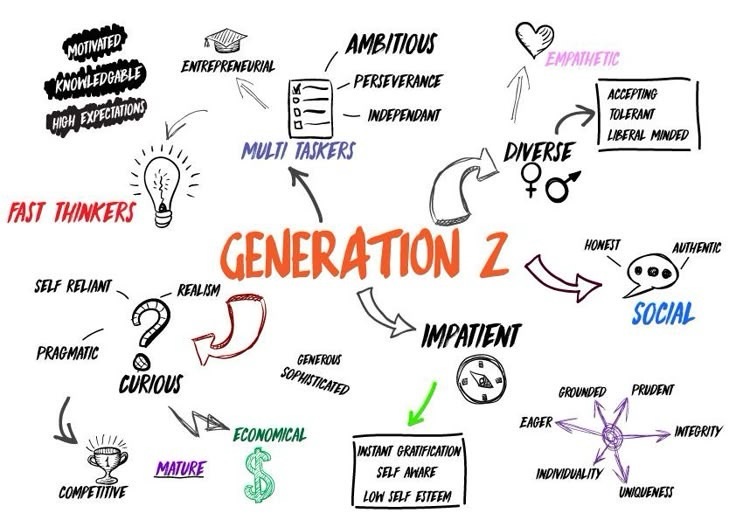
Business is being rewritten for a new generation. Not only are current young leaders embracing innovation, but they’re rewriting the rules by which companies are operated and money is made. With tech smarts, business savvy, and a global mindset, this next generation of professionals is showing that age is merely a number when it comes to creating powerful, successful ventures.
- Digital Advantage
According to a 2024 Deloitte report, 70% of Gen Z business leaders use social media as their go-to platform for business growth, while only 27% of previous generations do. This digital-native model facilitates scaling rapidly, affordably, and directly communicating with customers. Such young leaders feel comfortable applying AI, automation, and analytics to make informed decisions faster.
- Redefining Leadership Models
As opposed to traditional top-down management, next-generation entrepreneurs appreciate collaboration, openness, and flexibility. McKinsey studies found that the companies headed with collaborative organizational models are 25% more profitable, which suggests that the new leadership is not just innovative but also financially savvy.
- Multiple Income Streams
The online economy and digital platforms have opened new opportunities. According to a 2023 Upwork survey, 53% of Gen Z employees earn income from more than one source, blending corporate jobs, freelancing, e-commerce, and digital content creation. This diversification offers them economic security while maintaining flexibility.
- Day-One Global Reach
Geography is no longer a barrier. Due to remote employment and online shopping, next-generation businesses start globally. Shopify reported that over 40% of new online startups in 2023 had international customers in their first year, compared to just 15% ten years earlier. Such global thinking enables exponential growth.
- Resilience and Flexibility
Perhaps the most typical trait of this generation is flexibility. Raised in times of dizzying technological change, economic uncertainty, and social unrest, they are set to adapt quickly. Harvard Business Review further contributes that Gen Z entrepreneurs are 30% more likely to iterate their business model in the first year, compared to millennial entrepreneurs.
Conclusion
The next generation aren’t just learning to run businesses—they are innovating with ingenuity, leveraging technology, and building robust, global models for success. The numbers show they aren’t just capable of making money but also shaping the future of leadership and business in ways that will define decades ahead.